

Dogs do not all need joint support at the same age. Some large breeds benefit from an earlier start. Many smaller dogs are fine until they slow down. The useful question is not “is my dog old enough?” It is “is my dog starting to find movement harder?”
This guide covers when to start, what to look for, and how to choose a simple daily routine.
The short answer
Start a joint supplement when you notice stiffness, slower walks, or hesitation on stairs, or earlier if your dog is a large or very active breed.
You do not need to wait until your dog is limping every day. Joint care works best as a steady habit, not a last-minute fix.
When large and active breeds should start
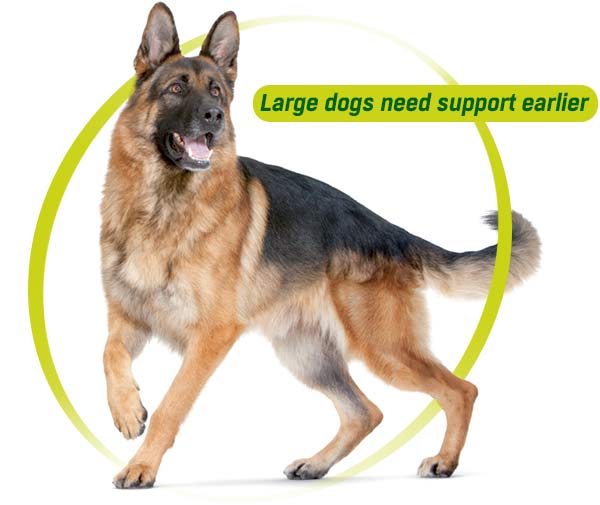
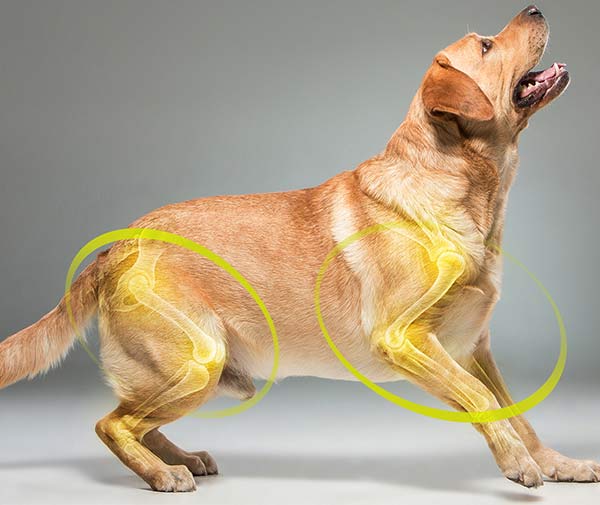
Larger dogs put more load through their hips, elbows and knees. Labradors, German Shepherds, Golden Retrievers and similar breeds are often first in line for joint support.
For these dogs, many owners start:
- In early adulthood if the dog is heavy, very active, or from a line with hip or elbow problems
- Around middle age if movement still looks easy, but you want to stay ahead
- As soon as stairs, rising or longer walks look harder
If you already wrote notes for a Labrador, the same logic applies to other big, active breeds.
When smaller and senior dogs should start

Small dogs are lighter and as a result, their joints are subject to less strain over the course of their lives. But vigilance is still wise. They often hide discomfort well, so a shorter walk or a pause before jumping up onto the sofa can be the first sign it is time to start. Smaller dogs usually need support too, just later. Watch for;
- Stiffness after rest
- Reluctance to jump on the sofa or into the car
- Shorter walks
- Licking or fussing over a joint
For senior dogs of all breeds and sizes, start when those signs appear. Do not wait for a bad week to become the new normal.
8 signs it may be time
Watch your dog carefully for a few days to see if they show any of these tell-tale signs that their joints are becoming stiff, worn and achey or that their mobility is not what it was:
- Slow to get up after lying down
- Stiff on the first part of a walk
- Hesitant on stairs
- Less keen to jump or play
- Lagging behind on routes they used to enjoy
- A limp that comes and goes
- Restlessness at night
- A change in mood after exercise
One quiet sign is enough to take it seriously. You do not need all eight.
Do young dogs need joint supplements?

Not every puppy does. A young dog with no mobility issues and a healthy weight can usually wait.
Consider an earlier start if:
- The breed is prone to hip or elbow problems
- The dog is growing quickly and carrying a lot of weight
- A vet has already flagged joint risk
If you are unsure, ask your vet before starting a young dog on daily joint care.
How long do joint supplements take to work?
Most owners should allow several weeks of daily use before judging the result. Some dogs may show improvements sooner, but often the full benefits only manifest after a couple of months of regular use. A consistent routine will always yield the biggest positive changes.
CANIVET HIP+JOINT formula is designed for daily use. Chews, which can be given as a treat or tablets which can be added to dogs’ food. The important part is that they’re served at the same time each day.
What to look for in a supplement
An effective joint supplement for dogs should include more than one working ingredient. This is because different active ingredients have different roles and work together for greater effects. In CANIVET HIP+JOINT that includes Glucosamine, Green Lipped Mussel, MSM, Turmeric, Hyaluronic Acid and supporting vitamins.
Other things to check for:
- A clear serving guide by weight
- A format that your dog will actually take
- A fair guarantee if you give it a proper trial
- The number of positive reviews it has received
- The source & quality of its production
CANIVET covers that with no-mess, easy to serve tablets or meaty treat chews, plus a generous 90 Day Results Guarantee.
Tablets or chews?
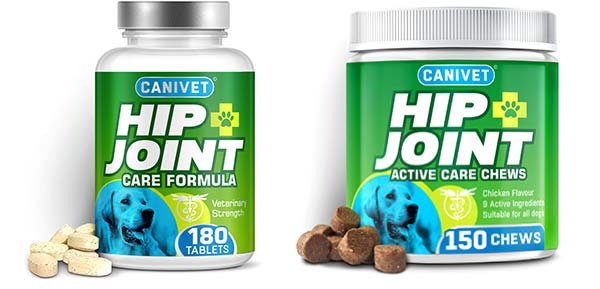
Which is right for your dog?
- Use tablets if your dog takes them easily in their food.
- Use chews if your dog is a fussy eater or prefers a treat.
- Both deliver effective daily joint care. The best choice is the one you will stick to.
Which format will give you the best value?
| Dog size | HIP+JOINT tablets | HIP+JOINT chews |
|---|---|---|
| Smaller dogs | 180 tablet pack is often enough | 1 chew a day up to 15kg |
| Medium dogs | 300 tablet pack lasts longer | 2 chews a day at 15–30kg |
| Larger dogs | 300 tablet pack, or a multibuy | 3–4 chews a day |
A simple way to start
- Match the serving to your dog’s bodyweight.
- Give a serving every day at the same time, with food or as a treat.
- Keep up a regular routine going several weeks, do a Loading Phase if appropriate.
- Watch getting up, how they tackle stairs and walking pace, not just one good day.
If you want to start now, CANIVET HIP+JOINT tablets and HIP+JOINT Chews are made in Britain, packed with proven ingredients and simple to give.
Joint supplements are most useful when they become part of the everyday routine before real problems start, not when movement has already become a struggle.